Quick answer: 3 new-build developments are listed on this page from €673 000. The Canary Islands sit outside the EU VAT area, so a new build here carries IGIC at 7% plus 1% AJD rather than the 10% IVA charged on the mainland, which is roughly €21,000 less on a €700,000 purchase.
Gran Canaria as a Property Market
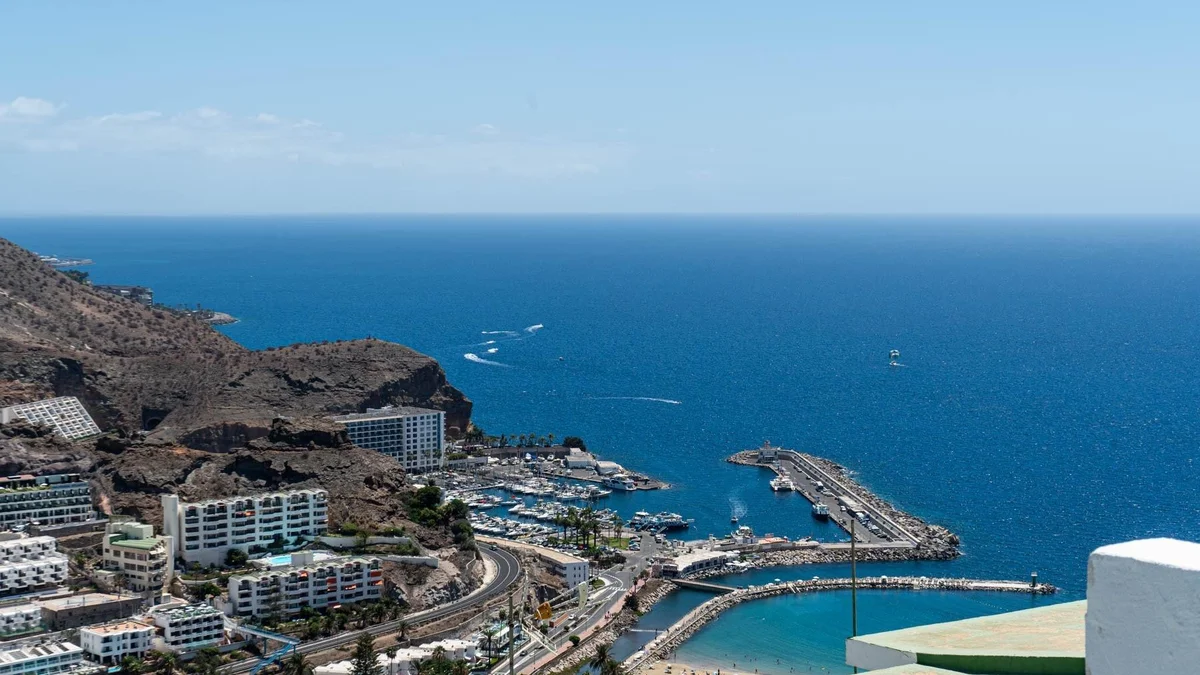
Gran Canaria concentrates its population and its economy in Las Palmas, a city of roughly 380,000 people on the north coast, while the tourist economy sits in the south around Maspalomas and Playa del Inglés. That split matters more here than on most Spanish islands, because the two ends of the island have different weather, different buyers and different rental cycles.
Our listed stock is in Las Palmas itself. That is a genuine city purchase: year-round tenants, a university, a hospital network, and a rental market that does not empty in October. It is not a resort purchase, and buyers looking for a south-coast holiday apartment are looking at resale rather than new build.
Our 3 listed developments here run from €673,000 to €998,000, all of them in Las Palmas rather than the southern resort strip.
The Canary Tax Regime, Which Is Not Mainland Spain
The single most important thing a buyer needs to know about the Canaries is that the islands sit outside the EU VAT area and run their own indirect tax. A new-build purchase here does not carry the 10% IVA that applies on the mainland. It carries IGIC at 7%, the Impuesto General Indirecto Canario, plus AJD stamp duty at 1%. On a €700,000 new build that is roughly €21,000 less than the identical purchase in Málaga, which is a material difference on a single transaction and one that mainland comparison articles routinely miss.
Resale purchases carry ITP at 6.5% in the Canaries, again below the 7% charged in Andalucía and well below the 9% now applied in the Valencian Community. The islands also operate the Reserva para Inversiones en Canarias and the ZEC regime, which matter for corporate structures rather than for an individual buying a home, but they are the reason the archipelago has a different fiscal character from the rest of Spain.
Set against that, the cost of getting there and the cost of maintaining a property at distance are both higher than on the mainland coast.
Letting in the Canaries
The letting regime here is regional, it is genuinely restrictive in the places tourists actually want to stay, and it decides your model before the yield maths does. Both Las Palmas and Santa Cruz de Tenerife provinces require a vivienda vacacional registration for any nightly let, and the Canary government has spent several years tightening the system. The rule that catches buyers is the classification: properties inside designated tourist zones frequently cannot be let residentially, and properties in residential buildings frequently cannot be let touristically, which is close to the opposite of what most arrivals assume. Community of owners statutes apply on top and can prohibit short letting outright by a 3 of 5 majority. Confirm the classification for your exact unit in writing before the reservation, because a property bought for holiday letting that turns out to be residential-only is a property you can use yourself or let for twelve months, and nothing else.
The letting regime is regional and it is genuinely restrictive in the places tourists actually want to stay.
Both Las Palmas and Santa Cruz de Tenerife provinces require a vivienda vacacional registration for nightly letting, and the Canary government has spent several years tightening it. Properties inside designated tourist zones frequently cannot be let residentially, and properties in residential buildings frequently cannot be let touristically, which is close to the opposite of what most buyers assume. Community of owners statutes apply on top and can prohibit short letting outright.
The practical consequence is that the letting model has to be confirmed before the purchase, not after. A property bought for holiday letting that turns out to sit in a residential-only classification is a property you can only use yourself or let long-term, and the yield maths changes completely.
Year-round demand is the compensation. The Canaries have the flattest seasonality in Spain: winter is the high season for Northern European visitors, which removes the empty November-to-March period that defines the mainland Mediterranean coast.
Canary ITP on resale is 6.5%, below the 7% charged in Andalucía and well below the 9% now applied in the Valencian Community.
What Island Ownership Actually Costs
Distance is the cost buyers underestimate, and on the Canaries it shows up in three separate places. Getting there is a flight rather than a drive, so a maintenance visit is a two-day commitment and anything you cannot handle remotely needs a local person on retainer: key-holding plus basic property management typically runs €80 to €150 a month before any letting service is added. Building materials and trades cost more because most of it arrives by sea, and renovation quotes on the islands commonly run 15% to 25% above the equivalent mainland job with longer lead times. Against that, IBI is generally moderate, the climate does less damage to a building than a mainland winter, and the year-round letting season means the property spends less of the year empty than a Costa del Sol equivalent would.
Distance is the cost buyers underestimate, and it shows up in three places.
Getting there is a flight rather than a drive, which means a maintenance visit is a two-day commitment rather than an afternoon. Anything you cannot handle remotely needs a local person on retainer, and key-holding plus basic property management on the islands typically runs €80 to €150 a month before any letting service.
Building materials and trades cost more because most of it arrives by sea. Renovation quotes on the islands commonly run 15% to 25% above the equivalent mainland job, and lead times are longer.
Against that, IBI on the islands is generally moderate, the climate does less damage to a building than the mainland winter, and the year-round letting season means a property spends less time empty. The arithmetic works, but it works differently from a Costa del Sol apartment and should be modelled separately rather than by analogy.
Buyer Scenarios on Gran Canaria
Las Palmas and the south are genuinely different purchases, and the three recurring scenarios divide along that line.
The city buyer. Someone buying in Las Palmas, a working capital with year-round resident demand rather than a resort calendar. Tenants here are residents on annual contracts, which removes the seasonality question entirely and makes the letting licence far less central to the model.
The southern resort buyer. Someone buying in the south for winter sun and holiday letting. The island’s seasonality is the flattest in Spain and winter is the high season, which is the opposite of the mainland pattern. That is an advantage for letting income and a constraint on personal use, because the months you most want to be there are the months the property earns most.
The tax-led buyer. Someone comparing the islands against the mainland at completion. The Canary Islands sit outside the EU VAT area, so a new build carries IGIC at 7% plus 1% AJD rather than the mainland 10% IVA, which is roughly €21,000 less on a €700,000 purchase, and resale carries ITP at 6.5%. Our stock on this page starts at €673 000.
All three scenarios run into the same requirement: vivienda vacacional registration, with residential and tourist classifications that are frequently exclusive. Establish which category the specific property holds before you offer.
What to Verify Before You Reserve
Classification decides the letting model here and it should be established before anything else, because residential and tourist categories are frequently exclusive on the islands. The tax check is simpler and easy to verify on paper: a Canary new build should show IGIC at 7% plus AJD at 1% on your reservation rather than mainland IVA at 10%, a difference worth roughly €21,000 on a €700,000 purchase, and a resale should show ITP at 6.5%. Stock listed on this page starts at €673,000. Two further items carry real weight for an owner who will not be on the island: the community statutes on short letting together with the last two annual meeting minutes, and a written quote for local management, because remote ownership makes that a fixed cost rather than an option.
- Whether the property is classified for residential or tourist use.
- That IGIC at 7% and AJD at 1% are what appears on your reservation, not mainland IVA at 10%.
- Community statutes on short letting and the last two AGM minutes.
- Local management arrangements and their monthly cost, since you will not be on the island.
- The promoting entity against the guarantee issuer, which we have not yet checked on these.
Las Palmas and the South Are Different Purchases
Gran Canaria splits more cleanly than most Spanish islands, and the two halves are genuinely different products. Las Palmas on the north coast is a working city of roughly 380,000 people with a university, a hospital network and a container port, with Las Canteras beach running through the middle of it. The rental market there is resident and year-round, and all 3 developments on this page sit in it. The south around Maspalomas and Playa del Inglés is the tourist island, priced by holiday demand, where new build is scarce because the coastal land was developed decades ago. The weather gap is real: the two ends are about 50 minutes apart and the north is materially cloudier.
Gran Canaria splits more cleanly than most Spanish islands, and the two halves are genuinely different products.
Las Palmas de Gran Canaria, on the north coast, is a working city of roughly 380,000 people with a university, a hospital network, a container port and a permanent resident population. Las Canteras beach runs through the middle of it, which is unusual for a Spanish city of that size. The rental market is resident and year-round, and this is where the new-build pipeline sits, including everything on our list.
The south around Maspalomas, Playa del Inglés and Meloneras is the tourist island: dependable sun, resort infrastructure, and a property market priced by holiday demand. New build there is scarce because the buildable coastal land went decades ago, so the south trades overwhelmingly as resale.
The weather difference is real rather than marginal. The north is cloudier and greener, the south is drier and reliably sunny, and the two are about 50 minutes apart. A buyer choosing on winter sun should not buy in Las Palmas by accident.
The north-south split also determines who eventually buys the property from you, which is the part most buyers think about last. Las Palmas sells into a mixed domestic and international market that transacts throughout the year, helped by a remote-working population that has grown steadily since 2015 and by a mainland Spanish community that relocated for work rather than for sun, in a city of roughly 380,000 residents. The south sells into a seasonal international pool of British, Irish and Nordic buyers whose viewing activity concentrates between November and March, which is the reverse of the Mediterranean pattern. Flight connectivity reinforces the difference: the island holds year-round routes across Northern Europe, but mainland Spanish connections route through Madrid or Barcelona for most destinations, which lengthens any trip that is not a direct holiday flight and makes remote management more of a commitment than it first appears.
The drive between the two ends of the island is roughly 50 minutes, and the north records materially more cloud cover across the year.
Buying Costs on the Islands
On the €673,000 entry in our listed range, a Canary new build carries IGIC at 7%, which is €47,110, plus AJD at 1% or €6,730. The mainland equivalent would be 10% IVA at €67,300 plus 1.2% AJD at €8,076, so the island saves roughly €21,500 on the same price.
Add notary at €600 to €1,200, land registry at €400 to €800, and an independent lawyer at 1% to 1.5%. Total acquisition cost lands near 10% over the price against roughly 13% on the mainland. Running costs move the other way: remote management adds €80 to €150 a month before any letting service, and trades charge a premium because materials arrive by sea.
Who Buys in Gran Canaria
The buyer mix here is more international than on the Spanish mainland coast and more permanent than the holiday profile suggests.
Las Palmas has drawn a remote-working population over the last decade, helped by year-round mild weather, a city with genuine urban life rather than a resort strip, and a cost of living materially below Madrid or Barcelona. Scandinavian, German and Dutch buyers are long established, and the island has a substantial mainland Spanish population that relocated for work rather than for sun.
The south is a different pool: British, Irish and Nordic holiday buyers, plus a winter-resident population that stays from November to March and leaves for the summer, which is the reverse of the Mediterranean pattern.
For your exit that matters. A Las Palmas apartment sells into a mixed domestic and international market that transacts throughout the year. A southern resort property sells into a seasonal international market whose activity concentrates in the winter months when buyers are actually on the island viewing.
Buyers should also weigh flight connectivity honestly. Gran Canaria has year-round routes across Northern Europe, but mainland Spanish connections run through Madrid or Barcelona for most destinations, which lengthens any trip that is not a direct holiday flight.
Insider tip: check the weather record for the specific side of the island, not for Gran Canaria as a whole. Las Palmas in the north is materially cloudier than Maspalomas in the south, the two are about 50 minutes apart, and buyers choosing on winter sun have bought in the wrong half more than once.
Las Palmas holds roughly 380,000 residents, about 45% of the island’s total population, which is what sustains a rental market outside the tourist season.
Listed Developments
These are developments we have not yet run through our own checks. The figures below are the developer’s own published release data, recorded on the date shown. We have not verified the bank guarantee wording, the promoting entity, the community fee estimate or the licence position on these, which is the difference between this table and the one above. Ask us and we will run those checks against a specific unit before you commit to anything.
| Development | Location | Homes | From | Developer | Source |
|---|---|---|---|---|---|
| Oase | Las Palmas de Gran Canaria | n/a | €673 000 | AEDAS Homes | published 2026-09-06 |
| Singulare | Las Palmas de Gran Canaria | n/a | €998 000 | AEDAS Homes | published 2026-09-06 |
| Gazmira | Las Palmas de Gran Canaria | n/a | on request | AEDAS Homes | published 2026-09-06 |
| Residencial Tamadaba I | Las Palmas de Gran Canaria | 155 | on request | Metrovacesa | published 2026-09-06 |
| Residencial Tamadaba II | Las Palmas de Gran Canaria | 189 | on request | Metrovacesa | published 2026-09-06 |
| Residencial Sansofí | Las Palmas de Gran Canaria | 65 | on request | Metrovacesa | published 2026-09-06 |
Where Gran Canaria Sits Among Spanish Markets
Tenerife runs under the same Canary tax and letting regime and is the natural comparison. On the mainland, Málaga offers the closest equivalent case: a working city with year-round tenants rather than a resort dependent on a summer season.
For the mainland tax position and how it differs from IGIC, see the Andalucía page and the Costa del Sol page. The apartments hub covers community fees, floor and orientation premiums and the community statutes question, all of which apply here.
Frequently Asked Questions
Our listed new-build stock in Las Palmas runs from €673,000 to €998,000. That is city-centre pricing in the island capital rather than resort pricing: the southern tourist strip around Maspalomas and Playa del Inglés trades largely as resale across a much wider range.
New build carries IGIC at 7% plus AJD at 1%, because the Canaries sit outside the EU VAT area and do not charge the 10% IVA applied on the mainland. Resale carries ITP at 6.5%. Notary, land registry and independent legal fees add a further 1.5% to 2.5% on either route.
Yes, and that is its main advantage over the resort south. Las Palmas is a working city of roughly 380,000 people with a university, a hospital network and a port, so the tenant base is resident rather than seasonal. The island's winter high season for visitors sits on top of that rather than replacing it.
Only with a vivienda vacacional registration and only if the property's classification permits it. Residential and tourist classifications are frequently exclusive in the Canaries, and a community of owners can prohibit short letting in its statutes regardless of what the classification allows.
They share the tax regime and the letting rules. The practical differences are that Tenerife is larger with two distinct markets north and south, while Gran Canaria concentrates its economy in Las Palmas and its tourism in the south. Our stock on both islands sits in the working capital rather than the resort strip.
On a €700,000 new build the Canary IGIC route saves roughly €21,000 against the mainland IVA route.
Get a Spain property shortlist
Tell us your budget and market (Costa Blanca, Costa del Sol, Balearic Islands). We reply within one business day with options matched to your goals.