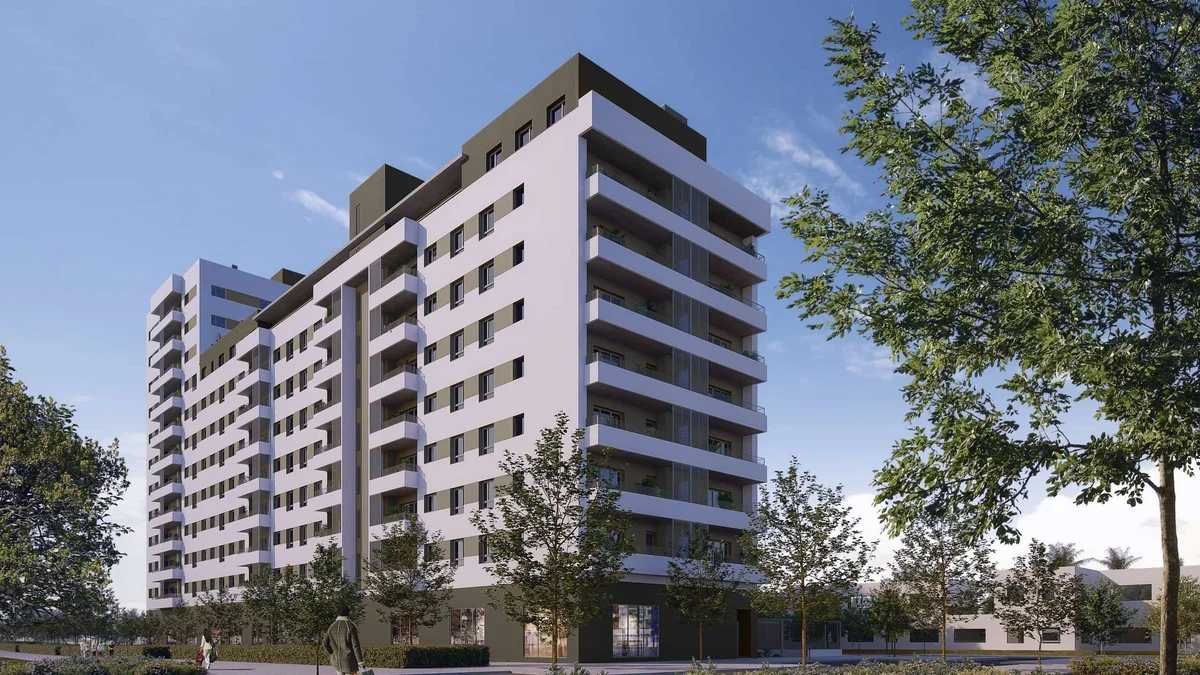
Quick answer: Spain’s housing shortage is structural: household formation near 226,000 in 2025 against only ~83,500 completions leaves a cumulative deficit above 730,000 homes, with BBVA and CaixaBank projecting up to 800,000 by 2027. New-build permits rose 8.8% to 139,016-162,200, and new-build sales hit 149,266 (+13.3%), but permits take years to become keys, so 714,237 total deals in 2025 still face tight supply in coastal hotspots where foreign buyers took 13.82% nationally and Alicante intensity reached 25.86 per 1,000 residents.
Cross-border investors hear “Spain has a housing crisis” and assume either guaranteed gains or imminent collapse. Neither is accurate. The Spain property supply deficit is a measurable gap between demographic demand and delivered stock, quantified by major banks and visible in rent pressure, off-plan absorption, and moderating but positive price floors in constrained markets. This guide explains the numbers, the pipeline lag, regional spreads, and how to use the deficit in underwriting without treating every developer brochure as a scarcity play.
What is the Spain property supply shortage?
Spain’s property supply deficit is the gap between roughly 226,000 new households forming each year and only about 83,500 homes completing. BBVA puts the cumulative shortfall above 730,000 units, on a path toward 800,000 by 2027 if construction velocity does not improve. It is a measurable stock gap, not a slogan.
The deficit is not abstract housing-policy rhetoric. It appears in rent inflation in job-rich cities, fast off-plan sell-outs on the Costa Blanca and Costa del Sol, and secondary-market liquidity where population growth meets planning constraints. Spain recorded 714,237 residential transactions in 2025, so the market clears large volume even while stock grows too slowly in the most sought-after municipalities.
| Term | Definition | 2025 anchor |
|---|---|---|
| Household formation | New households needing housing | ~226,000 (CaixaBank) |
| Completions | New homes finished and habitable | ~83,500 |
| Annual gap | Formation minus completions | ~142,500 implied |
| New-build permits (visados) | Approved pipeline | 139,016-162,200 (+8.8%) |
| New-build sales | Forward contracts / first sales | 149,266 (+13.3%) |
| Cumulative deficit | Stock shortfall vs need | 730,000+ → 800,000 by 2027 |
Understanding the deficit starts the underwriting path; finishing it requires municipality data from the Spain property investment guide and the paired 2026-2027 market forecast.
Red flag: a sales deck citing the 730,000-unit national deficit as the reason to buy one specific scheme. The shortfall concentrates in supply-constrained municipalities with high transaction intensity. It says nothing about an inland development competing against surplus resale listings at the same €220,000 price point.
How did Spain reach a 730,000+ housing shortfall?
The shortfall is cumulative, which is why it reached 730,000 rather than appearing suddenly. Construction never recovered its pre-2008 rate, and each year since has added the difference between roughly 226,000 households forming and about 83,500 homes completing. A deficit built one year at a time cannot be closed in one year either, and that is the whole reason it functions as a floor under prices.
Spain’s cumulative housing shortfall built over years when construction undershot demographic recovery after the 2008 crash, migration returned, tourism expanded, and coastal planning limits capped new supply even as household formation reached roughly 226,000 annually.
The 2008-2015 construction stop left a deep hole. Recovery since 2015 has been selective: developers prioritize bankable coastal plots, municipalities enforce urban limits, and labour or material bottlenecks extend build timelines. Meanwhile foreign buyers remained structurally active at 13.82% of deals in 2025, concentrating demand where supply is slowest to respond.
| Phase | Supply behavior | Demand behavior | Deficit effect |
|---|---|---|---|
| 2008-2015 | Construction collapse | Weak employment | Negative pipeline |
| 2015-2020 | Gradual restart | Domestic recovery | Gap reopens |
| 2020-2023 | Covid disruption then surge | Remote work inflow | Accelerating gap |
| 2024-2025 | Permits rising (+8.8%) | 714,237 deals | Cumulative 730K+ |
| 2026-2027 forecast | Completions lag permits | Formation ~226,000 | Toward 800K (BBVA) |
The Golden Visa property route closed 3 April 2025, removing one demand channel but not the underlying household formation driver. Lifestyle, retirement, and yield buyers still compete for finite coastal stock. Residency alternatives are covered in Spain Golden Visa ended 2025.
What is the household formation vs completions gap?
Roughly 226,000 households form each year against about 83,500 completions, an implied annual gap near 142,500 homes. That single subtraction is the entire deficit thesis, and its weakness is that it is national: the gap is not distributed evenly, and some municipalities carry surplus resale stock while the country as a whole is short.
The core of Spain’s housing shortage is simple arithmetic: roughly 226,000 new households form each year while only about 83,500 homes complete, leaving an annual shortfall near 142,500 units before accounting for obsolescence or second-home demand.
CaixaBank’s 226,000 household formation figure captures marriages, separations, inward migration, and young adults leaving shared homes. Completions near 83,500 measure keys delivered. Even if some formation is absorbed by existing empty stock, bank models conclude the cumulative gap exceeds 730,000 with a 2027 path toward 800,000 on BBVA estimates.
| Flow | Annual figure | What it measures |
|---|---|---|
| Household formation | ~226,000 | New housing need |
| Completions | ~83,500 | New supply delivered |
| Implied annual gap | ~142,500 | Demand minus keys |
| New-build sales | 149,266 (+13.3%) | Forward demand commitment |
| New-build permits | 139,016-162,200 (+8.8%) | Future supply approval |
| Residential transactions (all) | 714,237 | Total market churn |
New-build sales exceeding completions is normal in undersupplied markets: buyers commit off-plan while construction catches up. The risk is timing: if handover slips, the deficit thesis does not protect you from delay. See off-plan property Spain guide and developer delay risks Spain.
What do rising permits and new-build sales signal?
They signal relief that has not arrived yet. Approvals running at 139,016 to 162,200 and up 8.8%, alongside 149,266 new-build sales up 13.3%, show developers committing and buyers absorbing. But a permit becomes keys in roughly 24 to 36 months, so today’s approvals ease a shortage in 2028 and 2029 rather than in 2026, and completions near 83,500 still sit far below formation near 226,000.
New-build permits of 139,016 to 162,200 (+8.8%) and new-build sales of 149,266 (+13.3%) signal that developers and buyers both believe the deficit will persist long enough to reward delivered stock, but permits are not instant housing.
Permits (visados de obra) authorize future construction. Completions follow after financing, labour, inspections, and licencia de primera ocupación. The +8.8% permit growth is constructive for the 2028+ supply picture, not a 2026 overnight fix. Meanwhile +13.3% new-build sales show absorption: buyers pay stage payments on forward contracts, often in Alicante and Málaga where foreign share exceeds 30%.
| Metric | 2025 reading | Supply interpretation |
|---|---|---|
| Permits +8.8% | 139,016-162,200 | Pipeline expanding |
| Sales +13.3% | 149,266 | Strong off-plan demand |
| Completions ~83,500 | Below formation | Deficit continues near term |
| Resale ~79% of 714,237 deals | Dominant channel | Existing stock carries market |
| New build ~21% | Material but not majority | Forward commitment risk |
Investors should read rising permits as future competition as well as future relief: today’s scarcity premium on well-located plots may erode when adjacent schemes deliver. Underwrite exit liquidity using transaction intensity, not deficit headlines alone. Alicante’s 25.86 deals per 1,000 residents indicates deep comparables; thin inland markets do not.
Where does the housing shortage hit hardest in Spain?
Not where the headline suggests. Alicante combines 53,385 deals, a 43.29% foreign share and 25.86 transactions per 1,000 residents, the highest intensity in Spain, while Madrid leads on absolute volume at 81,484 deals under quite different affordability constraints. A shortage that bites in a metropolitan core and a shortage that bites in a coastal second-home market are different problems with different investment consequences.
Spain’s housing shortage is national in statistics but local in experience: Alicante combines 53,385 deals, 43.29% foreign share, and 25.86 transactions per 1,000 residents, while Madrid leads absolute volume with different supply dynamics.
| Province / area | Deficit sensitivity | 2025 liquidity signal |
|---|---|---|
| Alicante (Costa Blanca) | High; planning limits on coast | 53,385 deals; 25.86/1,000; 43.29% foreign |
| Málaga (Costa del Sol) | High; premium land scarce | 36,117 deals; 32.80% foreign |
| Madrid | High formation; vertical build | 81,484 deals; affordability cap |
| Barcelona | Tight rent; strict STR rules | High volume; regulatory friction |
| Valencia | Rising nomad inflow | Growing competition for rentals |
| Inland / depopulating zones | Lower formation pressure | Surplus stock in some towns |
Foreign intensity amplifies the deficit on the coast. National foreign share 13.82% masks Alicante at 43.29% and Málaga at 32.80%. A spain housing shortage property thesis therefore starts with province selection, detailed in Costa Blanca property investment guide and Costa del Sol property investment guide. The national transaction series behind these shares is covered in Spain property market record transactions 2025 and the foreign buyers H1 2026 briefing.
How does the supply deficit affect prices, rents, and off-plan?
Where formation near 226,000 outruns completions near 83,500, the deficit produces rental pressure and a price floor rather than runaway appreciation. National price growth is moderating, not disappearing. New-build sales rose 13.3% to 149,266 units in 2025, which shows forward demand absorbing stock well before the keys exist.
CaixaBank and BBVA both tie cautious optimism in their forecasts to the deficit: price growth moderates from the steepest post-2020 years, but a broad crash is unlikely where formation beats completions. That is the floor narrative. It coexists with moderating appreciation because affordability and rates cap buyer budgets.
| Channel | Deficit effect | Investor mistake to avoid |
|---|---|---|
| Long-term rents | Upward pressure in tight towns | Assuming STR without licence |
| Resale prices | Floor in liquid municipalities | Paying listing ask without comps |
| Off-plan launches | Fast absorption (+13.3% sales) | Skipping bank guarantee checks |
| Resale (79% volume) | Immediate occupation premium | Ignoring community debts |
| Yields | Gross 5-6% on value coast | Quoting gross as net |
Model net yield after IBI, community fees, management, vacancy, and non-resident tax. EU residents deduct expenses at 19% on net; non-EU pay 24% on gross with no deductions, a critical gap for UK buyers post-Brexit. See Spain non-resident income tax rental and buy-to-let Spain guide.
Buyer scenario: new-build sales of 149,266 in 2025 ran well ahead of roughly 83,500 completions, so buyers are committing forward while keys lag. On an off-plan purchase the deficit supports your eventual resale exit but does nothing for your handover date, which is precisely why the Ley 57/1968 guarantee matters more in a tight market, not less.
What are the pros and cons for investors in a deficit market?
A shortage helps you as a landlord and works against you as a buyer, and both effects land on the same purchase. Rental support in a market like Alicante, with 53,385 deals and a 43.29% foreign share, is real and durable. So is the handover risk carried by the 149,266 new-build sales that the same shortage encourages, because a market short of homes is a market with strong incentives to sell them before they exist.
| Pros | Cons |
|---|---|
| Formation ~226,000 vs completions ~83,500 | Not every town is supply-starved |
| Cumulative 730K-800K deficit by 2027 | Permits lag years behind keys |
| 714,237 deals show market depth | 21% new build adds handover risk |
| Foreign share 13.82%; Alicante 43.29% | Golden Visa closed Apr 2025 |
| New-build sales +13.3% prove absorption | Sales can exceed sustainable rent |
| Permits +8.8% eventual relief | Future supply may compress premiums |
| Alicante intensity 25.86/1,000 | Licence rules vary by municipality |
Treat the deficit as a filter: prefer municipalities with high transaction intensity and limited developable land, then run standard legal due diligence from due diligence Spain property and buy property Spain foreigner.
What are the risks when the deficit thesis fails?
In three specific ways, none of which shows up in a national statistic. A countrywide shortage can sit on top of genuine local oversupply, so your municipality may be long even while Spain is short. Staged payments can be made without individual Ley 57/1968 certificates behind them, which turns a shortage-driven off-plan boom into unsecured lending. And a short-let income model can be removed overnight by a municipal moratorium the national data never mentions.
| Risk | Why it happens | Mitigation |
|---|---|---|
| Off-plan delay | Sales +13.3% pull forward commitments | Ley 57 guarantee each stage |
| False scarcity | Brochure cites national deficit | Check local completions pipeline |
| STR shutdown | Municipal moratoria | Written licence confirmation |
| Overpaying | Competition in Alicante/Málaga | Negotiate vs registered comps |
| Non-EU tax drag | 24% on gross rent | Underwrite net, not gross yield |
| Future supply wave | Permits +8.8% deliver 2028+ | Model exit before adjacent handovers |
| Residency mismatch | Golden Visa ended 3 Apr 2025 | Separate immigration advice |
Pipeline detail for 2026 buyers is in new build developments Spain 2026 and the Costa del Sol new build pipeline briefing. Snagging and completion quality matter once keys arrive: snagging inspection Spain new build.
What are three scenarios for living with the supply deficit?
The same shortage produces three different strategies, and they are not interchangeable. A long-let landlord in a high-intensity market like Alicante monetises the rental pressure directly. A resale buyer pays a premium for immediate occupation and skips construction risk entirely. An off-plan buyer accepts timing risk in exchange for launch pricing. Each is a coherent response to the deficit; choosing between them is a question about your own tolerance for delay.
Scenario analysis shows how the same deficit data supports different strategies: a landlord capturing rent pressure, a resale buyer paying for immediate occupation, and an off-plan buyer trading timing risk for launch pricing.
Scenario 1: Long-let landlord in supply-starved Alicante
An investor buys a €240,000 resale apartment in a municipality with 25.86 transactions per 1,000 residents. The deficit supports rent growth and low void risk for quality stock. Underwrite 5.0% to 5.8% gross, then subtract costs and NRIT. Risk: buying in a building with pending STR enforcement that caps tenant pool. Link: long-term vs holiday rental Spain.
Scenario 2: Immediate occupation vs waiting on pipeline
A buyer chooses resale (79% of national volume) at €310,000 rather than waiting 24 months for €295,000 off-plan. The €15,000 premium buys immediate rent and avoids handover delay while the deficit still supports values. Risk: hidden comunidad debts. Link: hidden costs buying property Spain.
Scenario 3: Off-plan in Málaga with deficit premium
A buyer commits €420,000 off-plan, expecting delivery scarcity to lift values. 149,266 new-build sales (+13.3%) confirm competition for forward stock. The deficit supports the thesis only if bank guarantees protect every stage and licencia de primera ocupación arrives on schedule. Risk: moderating price growth erases launch premium. Link: bank guarantee off-plan Spain.
How does the supply deficit interact with 714,237 annual deals?
Volume and scarcity are answering different questions, and conflating them is the most common error made with these numbers. The 714,237 residential deals recorded in 2025, up 11.5%, prove that Spanish property is liquid and tradeable, with foreign buyers accounting for 13.82% of them. Liquidity is about how easily stock changes hands; the deficit is about whether enough stock exists. A market can be highly liquid and still short, which is precisely what Spain is.
| 2025 metric | Figure | Deficit read-through |
|---|---|---|
| Residential transactions | 714,237 (+11.5%) | Liquidity persists despite shortage |
| Foreign purchases | ~97,480 (13.82%) | Coastal concentration above national average |
| Resale share | ~79% | Immediate occupation still dominant |
| New-build sales | 149,266 (+13.3%) | Forward demand into pipeline |
| Completions | ~83,500 | Keys lag formation ~226,000 |
Spain’s 714,237 residential transactions in 2025 prove the deficit has not frozen activity: buyers still trade, developers still sell 149,266 new-build units, and foreigners still purchase roughly 97,480 homes (13.82%). The shortage shapes prices and rents; it does not end market liquidity.
Integrating transaction data prevents two errors: assuming crisis means bargain bins everywhere, or assuming crisis means infinite appreciation. Resale at ~79% keeps the market functioning for buyers who need keys now. New build at ~21% channels deficit demand into forward contracts. Both sit inside a 714,237-deal ecosystem where Alicante foreign share 43.29% shows how international capital concentrates where the spain housing shortage property narrative is strongest.
For yield corridors tied to tight supply, see highest rental yield areas Spain and Spain rental yield guide. For purchase tax stacks affecting total entry cost, see cost of buying property Spain.
What should foreign buyers verify about deficit claims?
Three checks separate a real supply story from a sales one: municipality transaction intensity, the local permit pipeline, and resale listing depth at your price point. A national figure of 730,000 units says nothing about the town you are buying in, and it is routinely quoted to move inland stock that has no resale market.
Invest Spain Property shortlist reviews in June 2026 repeatedly surface the same deficit misuse: brokers cite 730,000+ units to sell inland schemes with weak resale depth, buyers ignore completions ~83,500 vs formation ~226,000 when comparing off-plan to immediate resale, and STR models skip licence checks because “Spain has a shortage.” We require municipality transaction intensity and permit pipeline notes before linking any project page.
Insider tip: Pull the registradores intensity figure for the exact municipality before you accept a national deficit slide in a sales deck. Alicante at 25.86 deals per 1,000 residents behaves nothing like a thin inland town with surplus resale listings at the same €220,000 price point.
| Check | 2025-2027 data point | Your action |
|---|---|---|
| Formation vs completions | 226,000 vs ~83,500 | Confirm local pipeline, not national slogan |
| Cumulative deficit | 730K-800K by 2027 | Use as location filter only |
| New-build sales | 149,266 (+13.3%) | Verify guarantees before stages |
| Permits | 139K-162K (+8.8%) | Map adjacent future supply |
| Foreign intensity | 13.82% national; Alicante 43.29% | Match strategy to province |
- Mar de Pulpi Phase 9, Almería coast from €170,000, lowest coastal entry we track.
Insider tip: When a broker cites Spain’s 730,000-unit deficit to sell inland stock, pull Alicante’s 25.86 transactions per 1,000 residents and ask for municipal completion data from the last 24 months. National formation near 226,000 versus completions near 83,500 does not protect a buyer in a town with surplus resale listings.
Foreign buyers evaluating Spain’s housing shortage in 2026 typically anchor on three bank-published figures before reserving off-plan: household formation near 226,000 against completions near 83,500, a cumulative deficit above 730,000 units moving toward 800,000 by 2027 on BBVA estimates, and 714,237 residential transactions proving liquidity despite tight stock. In Alicante province, 53,385 deals and 43.29% foreign share show where scarcity bites hardest, while national foreign participation at 13.82% understates coastal competition. New-build sales of 149,266 (+13.3%) exceed completions because buyers commit forward; permits at 139,016 to 162,200 (+8.8%) signal relief only after 2028 in many municipalities. editorial review treats these numbers as a location filter, not a price guarantee, and requires written bank guarantees on every off-plan stage before shortlisting.
The pipeline lag between permits and keys typically means a 2026 buyer still faces tight coastal stock even when visados rise 8.8% nationally. Completions near 83,500 in 2025 remained far below household formation near 226,000, so forward sales of 149,266 new-build units (+13.3%) pull demand into off-plan contracts while physical supply catches up over 24 to 36 months. Foreign buyers concentrated 43.29% of Alicante deals and 32.80% in Málaga, amplifying competition for well-located schemes. Investors who model exit in 2028 should map adjacent permit approvals within 2 kilometres, because the same deficit that supports rent today can compress resale premiums when neighbouring phases deliver simultaneously. Budget 10 to 13% purchase costs on top of list price and underwrite net yield after 19% EU or 24% non-EU NRIT before relying on shortage rent claims.
Closing verification checklist
Six items separate a shortage you can invest behind from one you have only read about, and all six are obtainable before the first transfer. Add 10% to 13% to the price for tax, notary, registry and legal work before any comparison; instruct a lawyer with no fee relationship to the seller or agent; and make every item below a condition of the arras contract rather than a question asked afterwards.
- Quantify the gap: ~226,000 formation vs ~83,500 completions.
- Track cumulative 730,000+ to 800,000 by 2027 as context, not a price promise.
- Read permits +8.8% as future supply, not immediate relief.
- Treat new-build sales +13.3% as forward risk plus opportunity.
- Anchor liquidity to 714,237 deals and provincial intensity (25.86/1,000 in Alicante).
- Confirm foreign share at province level, not 13.82% national average alone.
- Remember Golden Visa closed 3 April 2025 when separating residency from investment.
- Underwrite net yield and tourist licence before relying on shortage rent claims.
Need help applying this guide to your purchase? Speak with our Spain advisory team for personalised due diligence support.
Get Free Spain ConsultationA shortage argument is only as good as the municipality it is applied to. Alicante ran a 43.29% foreign share in 2025 and Málaga 32.80%, against 13.82% nationally, so the depth behind any local scarcity claim is provincial rather than Spanish. Test three things on every scheme: add 10 to 13% to the list price before comparing, model net yield two to three points below whatever gross band the marketing quotes, and confirm tourist-licence feasibility block by block instead of accepting a town-level assurance.
Delivery volumes are tracked separately in our new-build completions briefing.
Frequently Asked Questions
The gap between new household formation, near 226,000 in 2025, and new completions, about 83,500. BBVA and CaixaBank estimate a cumulative shortfall above 730,000 units, potentially reaching 800,000 by 2027 if delivery does not accelerate.
Roughly 83,500 completions in 2025, with 139,016 to 162,200 new-build permits approved (+8.8%). Permits are pipeline; occupied supply lags by several years.
No. It supports pricing and rents in supply-constrained, liquid municipalities such as Alicante at 25.86 deals per 1,000 residents. Poor locations and unlicensed STR assets can still underperform.
Foreigners bought 13.82% of residential deals in 2025, heavily concentrated on the coast. The shortage increases competition for well-located stock and off-plan absorption but does not remove legal or tax due diligence.
New-build sales reached 149,266 in 2025 (+13.3%), exceeding completions because buyers commit forward. Rising permits (+8.8%) should ease pressure over time, not immediately.
Prioritize high-intensity municipalities, verify off-plan bank guarantees, confirm tourist licences for STR plans, and underwrite net yield after tax. Use the deficit as a location filter, not a substitute for independent legal review.
Roughly 226,000 households form each year while only about 83,500 homes complete, an implied annual gap near 142,500. The shortfall built up after the 2008-2015 construction stop, and BBVA puts the cumulative figure above 730,000 units, potentially 800,000 by 2027.
Not quickly. Permits of 139,016 to 162,200 (+8.8%) signal relief mainly after 2028, because a permit takes roughly 24 to 36 months to become keys, while completions near 83,500 still sit far below household formation near 226,000.
Get a Spain property shortlist
Tell us your budget and market (Costa Blanca, Costa del Sol, Balearic Islands). We reply within one business day with options matched to your goals.