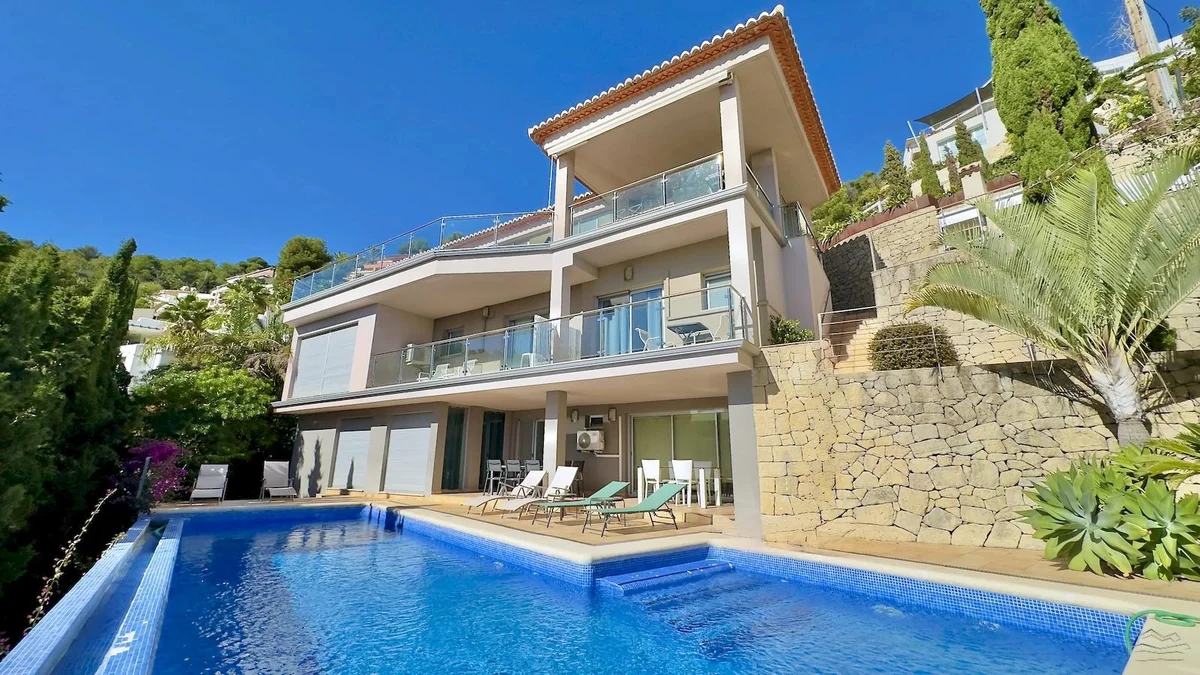
Quick Answer: Costa Blanca is Spain’s most active investment market, recording 53,385 residential transactions in 2025 with a record 43.29% foreign buyer share. Supported by a June 1, 2026 tax reform reducing resale ITP to 9% under €1,000,000 and gross yields averaging 5.0% to 6.2%, the province offers exceptional liquidity and cash flow potential.
Looking for what is actually on the market? This page is the analysis. Current verified stock with prices is on property for sale in Costa Blanca.
Considering a Costa Blanca property purchase? Our Spain advisors connect international buyers with independent bilingual lawyers, tax advisors, and licensed agents who specialise in the Alicante residential market.
Get Free Costa Blanca ConsultationWhy is Costa Blanca Spain’s Leading Property Investment Destination in 2026?
Costa Blanca represents Spain’s highest-velocity property market, driven by a record 53,385 residential transactions in 2025 and an unmatched 43.29% foreign buyer share. The region combines robust infrastructure, year-round tourism, and high market intensity of 25.86 transactions per 1000 residents, outperforming Madrid and Barcelona in investment liquidity.
To fully appreciate the investment thesis of the Costa Blanca, one must look at the underlying macroeconomic data. While metropolitan hubs like Madrid and Barcelona dominate in absolute transaction volumes due to their massive populations, Alicante province (which encompasses the entire Costa Blanca coastline) exhibits the highest market intensity in the Kingdom of Spain. In 2025, the province posted 53,385 residential property transactions, securing the number three spot in Spain’s national rankings.
However, when adjusted for population, Alicante’s market intensity stands at an extraordinary 25.86 transactions per 1000 residents, the highest figure in the country. This indicates a highly liquid, high-velocity real estate ecosystem where assets can be acquired and liquidated with significantly less friction than in slower regional markets.
The primary engine behind this liquidity is the international buyer segment. According to official registry data, Alicante recorded a massive 43.29% foreign buyer share in 2025, the highest percentage of any Spanish province. This international demand is structurally diversified, comprising British, German, Dutch, Belgian, French, Scandinavian, and Polish buyers. This multi-national demographic profile insulates the local market from economic downturns in any single sovereign nation, providing a stable, resilient demand curve for both resales and rentals.
Several structural factors underpin this sustained international appeal:
- Unmatched Connectivity: Alicante-Elche Miguel Hernández Airport (ALC) is Spain’s fifth-busiest airport, handling over 16 million passengers annually. It serves as a major hub for low-cost and flag carriers alike, offering direct, year-round flights to over 110 European destinations. This makes the Costa Blanca highly accessible for weekend commuters, digital nomads, and seasonal tourists.
- Microclimatic Advantage: Sheltered by mountain ranges, the Costa Blanca enjoys a unique microclimate characterized by over 320 days of sunshine per year and an average annual temperature of 19°C. This climatic stability drives a highly reliable shoulder season tourist trade, extending the rental calendar far beyond the traditional July-August peak.
- Price-to-Quality Ratio: Despite substantial capital appreciation over the past decade, property prices on the Costa Blanca remain highly competitive compared to other major Mediterranean basins. While prime frontline villas in Marbella (Costa del Sol) or Ibiza regularly exceed €12,000 per square metre, premium coastal properties on the Costa Blanca can still be acquired for €3,500 to €5,500 per square metre, offering a more accessible entry point for private investors.
For a broader perspective on the national real estate landscape, investors should consult our comprehensive Spain Property Investment Guide, which outlines national transaction trends, regulatory updates, and macro-level demographic shifts.
Insider tip: the coast splits hard at Alicante and the two halves are different products rather than two price points. North of the city the terrain is rocky and green, stock is villa-weighted and prices run two to three times the southern band; south of it the market is predominantly resale apartments at an accessible entry. Decide which half you are buying in before comparing anything on price per square metre.
How Did the June 1, 2026 Tax Reform Change Costa Blanca Buying Costs?
The Generalitat Valenciana’s June 1, 2026 tax reform slashed the general resale Property Transfer Tax (ITP) from 10% to 9% for properties valued under €1,000,000. Luxury properties over €1,000,000 maintain an 11% ITP, while new-build Stamp Duty (AJD) fell from 1.5% to 1.4%, significantly reducing transaction friction.
For years, the Valencian Community (which governs the Costa Blanca) maintained a flat 10% Property Transfer Tax (ITP) on resale properties, placing it among the higher-taxed regions in Spain. In a strategic bid to stimulate transaction volumes and attract high-value international capital, the regional government enacted a landmark tax reform that officially took effect on June 1, 2026. This reform represents a fundamental shift in the transaction cost structure for property buyers.
Under the new legislation, the general ITP rate for resale residential properties valued under €1,000,000 has been reduced from 10% to 9%. This 1% reduction represents a direct saving of €5,000 on a €500,000 acquisition, directly improving the investor’s net cash-on-cash yield from day one.
For luxury real estate acquisitions, the reform introduces a progressive threshold: for properties valued above €1,000,000, the portion of the purchase price exceeding the €1M threshold is taxed at 11%, while the portion under €1,000,000 benefits from the 9% rate. This progressive structure keeps the Costa Blanca highly competitive for mid-market and premium buyers, while establishing a clear luxury tier for high-net-worth acquisitions.
New-build properties have also benefited from this legislative overhaul. While the national Value Added Tax (VAT / IVA) on new-build residential property remains fixed at 10%, the regional Stamp Duty (Actos Jurídicos Documentados or AJD) has been reduced from 1.5% to 1.4% as of June 1, 2026. This brings the total tax burden on a new-build property down to 11.4% (excluding notary, registry, and legal fees).
To assist investors in budgeting for an acquisition, the table below outlines the complete transaction cost breakdown for both resale and new-build properties under the post-June 1, 2026 tax framework.
| Cost Component | Resale Property (under €1,000,000) | Resale Property (over €1,000,000) | New-Build Property (All Price Points) |
|---|---|---|---|
| Government Tax | 9.0% ITP | 9.0% on first €1M; 11.0% on excess | 10.0% VAT (IVA) |
| Stamp Duty (AJD) | None | None | 1.4% AJD |
| Notary Fees | 0.1% - 0.2% (regulated scale) | 0.1% (capped scale) | 0.1% - 0.2% (regulated scale) |
| Land Registry | 0.05% - 0.1% (regulated scale) | 0.05% (capped scale) | 0.05% - 0.1% (regulated scale) |
| Legal Fees | 1.0% - 1.5% (plus 21% VAT) | 1.0% (negotiable for luxury) | 1.0% - 1.5% (plus 21% VAT) |
| Total Acquisition Costs | approx. 10.2% - 11.0% | approx. 11.5% - 12.5% | approx. 12.6% - 13.2% |
Note: If purchasing with a Spanish mortgage, additional bank valuation fees (approx. €300 to €600) and mortgage arrangement fees (0.5% to 1.5%) will apply. Under Spanish law, the lending bank is required to pay the AJD stamp duty associated with the mortgage deed itself, meaning the buyer only pays the AJD on the property purchase deed for new builds.
Understanding these regional tax variations is critical when comparing the Costa Blanca to other Spanish regions. For instance, while Madrid offers a flat 6% ITP, Catalonia and Galicia remain at 10%. The Costa Blanca’s new 9% rate strikes a highly competitive middle ground, particularly when combined with the region’s superior rental yields. For a detailed breakdown of how these costs accumulate nationally, refer to our guide on the Cost Of Buying Property Spain.
What Rental Yields and Income Potential Exist Across Costa Blanca Corridors?
Costa Blanca property investments generate gross rental yields averaging 5.0% to 6.2% before operating costs, significantly outperforming Spain’s major metropolitan areas. High-demand coastal nodes like Torrevieja and Alicante city lead in yield performance, while premium northern zones like Javea and Altea offer lower yields but superior long-term capital appreciation.
From a cash-flow perspective, the Costa Blanca is one of the most rewarding regions in Western Europe. While prime residential yields in cities like Madrid, Paris, or Munich have compressed to under 3.5% due to sky-high entry prices, the Costa Blanca’s favorable price-to-rent ratio allows investors to secure robust, cash-flowing assets. The province’s value corridors generate average gross rental yields between 5.0% and 6.2% before operating costs, with select micro-markets pushing past 7.0%. Deeper area guides cover Calpe, Moraira, Javea, Denia, Benidorm, and Torrevieja.
Achieving these yields requires a clear understanding of the operational cost structure and the distinction between gross and net yields. Net yields are typically 1.5 to 2.2 percentage points lower than gross figures once all local expenses and taxes are deducted.
The primary operating expenses for a rental property on the Costa Blanca include:
- Property Tax (IBI): Impuesto sobre Bienes Inmuebles is an annual municipal tax based on the cadastral value (valor catastral) of the property. On the Costa Blanca, IBI rates typically range from 0.4% to 0.8% of the cadastral value, translating to roughly €200 to €800 per year for a standard two-bedroom apartment.
- Community Fees (Gastos de Comunidad): If the property is located within a residential urbanization or apartment block, the owner must contribute to the maintenance of common areas, swimming pools, gardens, and elevators. These fees range from €50 per month for basic blocks to over €250 per month for luxury complexes with extensive amenities.
- Property Management: Professional management agencies typically charge 10% to 15% of the gross monthly rent for long-term tenancies, and 15% to 25% (plus cleaning fees) for short-term holiday rentals.
- Non-Resident Income Tax (NRIT / IRNR): This is a critical tax consideration. Non-resident property owners must pay tax on their rental income.
- EU and EEA residents benefit from a preferential rate of 19% on net rental income, allowing them to deduct all legitimate operating expenses (mortgage interest, community fees, IBI, management, depreciation, and repairs).
- Non-EU residents (including British, Swiss, American, and Gulf investors) are taxed at a flat rate of 24% on gross rental income, with absolutely no expense deductions permitted. This tax asymmetry significantly impacts the net yield for non-EU buyers and must be factored into all financial models.
The table below provides a realistic, data-driven cash flow projection for a standard €250,000 investment property across different Costa Blanca municipalities, comparing EU and Non-EU tax scenarios.
| Metric | Alicante City (Center) | Torrevieja (La Mata) | Benidorm (Levante) | Altea (Altea Hills) | Javea (Port) |
|---|---|---|---|---|---|
| Purchase Price | €250,000 | €180,000 | €280,000 | €450,000 | €400,000 |
| Acquisition Costs (11%) | €27,500 | €19,800 | €30,800 | €49,500 | €44,000 |
| Total Capital Invested | €277,500 | €199,800 | €310,800 | €499,500 | €444,000 |
| Annual Gross Rent | €14,500 | €11,700 | €16,800 | €20,250 | €16,000 |
| Gross Rental Yield | 5.80% | 6.50% | 6.00% | 4.50% | 4.00% |
| Annual Operating Costs | €2,900 | €2,340 | €3,700 | €4,500 | €3,200 |
| Net Income Before Tax | €11,600 | €9,360 | €13,100 | €15,750 | €12,800 |
| EU Tax (19% on Net) | €2,204 | €1,778 | €2,489 | €2,993 | €2,432 |
| Non-EU Tax (24% on Gross) | €3,480 | €2,808 | €4,032 | €4,860 | €3,840 |
| EU Net Yield (After Tax) | 3.39% | 3.79% | 3.41% | 2.55% | 2.34% |
| Non-EU Net Yield (After Tax) | 2.93% | 3.28% | 2.92% | 2.18% | 2.02% |
Note: Operating costs in this model include property management (12%), IBI, community fees, home insurance, and basic maintenance. Rental figures assume a hybrid rental strategy (medium-term winter lets combined with summer weekly rentals where legally licensed).
For a deeper dive into how these yield dynamics operate on a national level, including a comparison of Spain’s top performing coastal and urban provinces, please refer to our dedicated Spain Rental Yield Guide.
How Do Costa Blanca’s Key Micro-Markets Compare for Property Investors?
Costa Blanca’s property market is divided into distinct northern and southern investment corridors, each offering unique price points, yield dynamics, and buyer demographics. The northern zone features high-end villas and strict development limits, whereas the southern zone delivers high-density, lower-entry apartments with excellent cash flow and mass-market rental appeal.
To invest successfully on the Costa Blanca, one must abandon the concept of a single, uniform market. The region is physically and economically divided into two highly distinct geographic corridors: the mountainous, low-density North, and the flat, high-density South, with Alicante City serving as the central urban pivot.
1. The Northern Corridor: Low-Density Luxury
The Northern Costa Blanca stretches from El Campello up to Denia, encompassing premium enclaves such as Altea, Calpe, Moraira, and Javea. This region is geographically defined by the Sierra de Aitana mountain range, which plunges directly into the sea, creating dramatic cliffs, private coves, and limited flat land.
Because of this topography, regional planning laws have strictly restricted high-rise development for decades. The North is characterized by low-density urbanizations of luxury Mediterranean and contemporary villas, premium townhouses, and boutique low-rise apartments.
- Javea and Moraira: These are the most exclusive municipalities on the Costa Blanca, often referred to as the Saint-Tropez of Spain. Building heights are strictly restricted, and there is a complete absence of high-rise apartment blocks. The buyer profile is dominated by wealthy Northern Europeans seeking capital preservation, privacy, and high-end lifestyle properties. While gross rental yields are lower (typically 3.5% to 4.5%), capital appreciation is highly robust, and the resale market is exceptionally stable.
- Altea: Famous for its white-washed old town and the exclusive Altea Hills gated community, Altea attracts luxury buyers seeking panoramic sea views and high-security environments. Properties here command a premium, with contemporary sea-view villas starting at €1,200,000.
2. The Southern Corridor: High-Density Cash Flow
The Southern Costa Blanca extends from Alicante City down to the border of Murcia, including Santa Pola, Guardamar del Segura, Torrevieja, and the Orihuela Costa (Punta Prima, Playa Flamenca, Cabo Roig, Villamartin).
Topographically, the South is flat and arid, which historically allowed for rapid, large-scale, high-density residential construction. This region is the epicenter of Spain’s mass-market holiday home industry.
- Torrevieja: Torrevieja is one of Spain’s most famous coastal towns, known for its salt lakes, sandy beaches, and highly affordable real estate. Entry-level one and two-bedroom resale apartments can still be found for under €120,000, making it a prime target for yield-focused investors. The rental market is exceptionally deep, driven by budget-conscious holidaymakers and long-term retirees. Gross yields here regularly exceed 6.5%, though capital appreciation is slower due to the vast supply of comparable properties.
- Orihuela Costa: This massive coastal strip offers a highly commercialized environment with extensive golf courses (such as Las Colinas and Villamartin) and the massive Zenia Boulevard shopping mall. It is highly popular with British and Scandinavian buyers, offering a robust mix of holiday rental demand and resale liquidity.
3. Alicante City: The Urban Pivot
Alicante City represents a compelling hybrid investment model. As a fully functioning provincial capital of over 350,000 residents, it does not suffer from the extreme seasonal vacancy that affects pure holiday resorts.
The city offers year-round rental demand from local professionals, public servants, university students, and medical staff, combined with a thriving urban tourism sector. Central districts like El Centro, Ensanche, and the historic Barrio de Santa Cruz offer gross yields of 5.0% to 6.0%, with strong capital growth potential driven by urban regeneration projects and the expansion of the Alicante Digital District tech hub.
To help visualize these geographic and economic contrasts, the table below compares the key investment metrics of the Costa Blanca’s primary micro-markets.
| Micro-Market | Average Price per sqm | Entry Price (2-Bed Apt) | Target Demographic | Primary Investment Play | Capital Growth Potential |
|---|---|---|---|---|---|
| Javea / Moraira | €3,800 - €5,500 | €320,000 | UHNW, Luxury Retirees | Wealth Preservation, Capital Growth | Very High |
| Altea / Altea Hills | €3,200 - €4,800 | €280,000 | Premium Lifestyle Buyers | Capital Growth, Luxury Rental | High |
| Alicante City (Center) | €2,600 - €3,800 | €220,000 | Professionals, Students, Tourists | Hybrid (Yield + Growth), Year-Round | High |
| Benidorm | €2,800 - €4,200 | €240,000 | Mass Tourists, Investors | High-Volume Short-Term Rental | Moderate |
| Torrevieja | €1,500 - €2,400 | €110,000 | Budget Tourists, Retirees | Yield-First, High-Cash-Flow | Moderate |
| Orihuela Costa | €1,800 - €2,800 | €140,000 | Golfers, Northern Europeans | Holiday Rental, High Liquidity | Moderate |
Unsure whether the premium North or the high-yield South aligns with your investment strategy? Contact for an independent, data-driven comparison of specific Costa Blanca neighborhoods.
Request Micro-Market ReportWhat Are the Legal and Licensing Requirements for Short-Term Rentals in Alicante?
Short-term tourist rentals (STR) on the Costa Blanca are subject to strict, municipality-specific regulations and licensing frameworks. Alicante city enforces rigid zone freezes, Javea maintains highly restrictive licensing requirements, and Benidorm requires explicit community of owners approval, making thorough local due diligence mandatory before acquiring any rental asset.
The regulatory landscape for short-term holiday rentals (Viviendas de Uso Turístico or VUT) in the Valencian Community has tightened dramatically over the past five years. Investors can no longer assume that buying a property automatically grants the right to rent it out on platforms like Airbnb or Booking.com. Today, navigating the legal framework is the most critical element of due diligence.
The Regional Framework: Decree-Law 9/2024
The overarching legislation is governed by the regional government (Generalitat Valenciana), which updated its tourist rental regulations via Decree-Law 9/2024. This law establishes several strict, region-wide mandates:
- The 5-Year Renewal Rule: Tourist licenses are no longer permanent. They are issued for a maximum period of five years, after which the owner must apply for a renewal, proving continued compliance with all municipal and regional regulations.
- The Cadastral Link: The tourist license is legally tied to the specific cadastral reference (referencia catastral) and the owner. If the property is sold, the new owner cannot simply inherit the license; they must apply for a transfer or a new license under the latest municipal rules.
- Mandatory Civil Liability Insurance: All registered tourist properties must carry specific civil liability insurance covering guest accidents up to regulated limits.
The Municipal Bottleneck: The Compatibility Certificate
While the regional government issues the final license number, the application cannot proceed without a Municipal Compatibility Certificate (Certificado de Compatibilidad Urbanística) issued by the local town hall (Ayuntamiento). This is where municipal autonomy creates vastly different investment environments across the Costa Blanca:
- Alicante City: The town hall has implemented a strict zoning plan that freezes new tourist licenses in the historic center (Casco Antiguo) and the traditional commercial center. In these saturated zones, new licenses are only granted for ground-floor properties or entire buildings dedicated to tourist apartments. In outer neighborhoods, licenses remain obtainable but are subject to strict structural requirements (such as independent access or being located directly above commercial premises). For a detailed comparison of Alicante’s municipal rules with other Spanish tourist hubs, see our guide on Tourist Licence Alicante Malaga.
- Benidorm: As Spain’s mass-tourism capital, Benidorm is highly receptive to holiday rentals. However, the town hall requires that the property’s Community of Owners (Comunidad de Propietarios) has not explicitly banned tourist rentals in its official bylaws. Under Spanish Horizontal Property Law, a community can ban or restrict STRs with a three-fifths majority vote. If such a ban is registered, the town hall will deny the Compatibility Certificate.
- Javea: Javea has adopted an exceptionally conservationist stance. The town hall enforces strict aesthetic and structural standards, and processing times for Compatibility Certificates can exceed six to nine months. Additionally, the local government has proposed seasonal caps and density limits to protect the local rental market for residents.
- Torrevieja: Torrevieja remains one of the most accessible markets for obtaining a tourist license. The town hall processes applications relatively quickly, and there are currently no blanket zone freezes. However, properties must still meet basic habitability requirements (minimum square footage, ventilation, and safety installations).
Step-by-Step Tourist License Application Process
To secure a legal short-term rental license on the Costa Blanca, investors must execute the following sequence:
- Check Community Bylaws: Verify no active STR ban exists in the community registry.
- Obtain Municipal Compatibility Certificate: Apply at the local Ayuntamiento; requires architectural plans.
- Submit Regional Declaration of Responsibility: File online with the Generalitat Valenciana; upload certificate and insurance.
- Receive Official Registration Number: VUT-A-XXXXX; must be displayed on all online listings.
- Register with National Police: Obtain credentials to report guest passport details within 24 hours of check-in.
Red Flag: The Danger of Unlicensed Holiday Rentals Operating an unlicensed holiday rental on the Costa Blanca is classified as a very serious infraction under Valencian tourism law. Regional inspectors actively monitor platforms like Airbnb using automated scraping tools. Fines for operating without a valid VUT number range from €10,001 to €600,000, and the platforms themselves are legally required to remove any listing that does not display a verified registration number. Never close on a property under the assumption that you can rent it quietly without a license.
Two registrations are needed on the Costa Blanca rather than one, and a property lacking either cannot legally be advertised. The Valencian tourist registration comes first, and since 2026 the national NRA rental registration number is required on top before any platform listing. Above both sits the community of owners, which can prohibit short letting in its statutes by a three-fifths majority, including after you complete, and no regional registration overrides that vote. Resale transfer tax in the region has been 9% under €1,000,000 since 1 June 2026, with 11% on the portion above. New build carries 10% IVA plus AJD instead, and budget 10% to 13% over the price for total acquisition costs whichever route you take. Confirm both registrations and the statutes for the specific unit before underwriting any short-let figure, since a property missing either cannot legally be advertised on a platform at all.
What Residency Alternatives Exist Following the Golden Visa Closure in 2025?
Following the official termination of Spain’s Golden Visa on April 3, 2025 under Organic Law 1/2025, property investors must utilize alternative residency pathways. The Digital Nomad Visa and the Non-Lucrative Visa have emerged as the primary residency routes for non-EU property buyers seeking long-term stays in Spain.
For a decade, the Golden Visa (Visado de Residencia para Inversores) was the premier pathway for non-EU nationals seeking Spanish residency, allowing anyone who invested €500,000 or more in real estate to secure a flexible residency permit. In response to housing affordability concerns and European Union pressure, the Spanish government officially abolished the real estate route of the Golden Visa on April 3, 2025, via Organic Law 1/2025.
Property purchases of any value, whether a €100,000 apartment in Torrevieja or a €5,000,000 luxury estate in Javea, no longer convey any automatic residency rights. Non-EU buyers (including British citizens post-Brexit) are restricted to the standard Schengen zone limit of 90 days out of every 180 days unless they secure a formal residency visa.
Fortunately, Spain offers two highly viable alternative residency pathways that align perfectly with property ownership on the Costa Blanca. For a comprehensive analysis of these post-Golden Visa options, investors should read our detailed guide on Spain Golden Visa Ended 2025.
1. The Spanish Digital Nomad Visa (DNV)
Introduced under the Startup Law, the Digital Nomad Visa has become the most popular route for active professionals, remote employees, and self-employed contractors who wish to reside in Spain while working for companies based outside of Spain.
- Key Requirements:
- Proof of Remote Work: Applicants must prove they have been working remotely for a non-Spanish company for at least three months prior to applying.
- Income Threshold: The minimum monthly income requirement is linked to the Spanish Minimum Wage (SMI). In 2026, the primary applicant must demonstrate a stable monthly income of at least €2,640 (representing 200% of the SMI), plus approximately €990 (75% of SMI) for a spouse, and €330 (25% of SMI) per dependent child.
- Professional Qualifications: A university degree or at least three years of documented professional experience in their field is required.
- Tax Advantage (The Beckham Law): DNV holders who relocate to Spain can apply for a special tax regime (often referred to as the modified Beckham Law). This allows them to be taxed as non-residents, paying a flat 24% tax rate on employment income up to €600,000 per year, rather than the progressive Spanish income tax rates which can reach up to 47%. Foreign-sourced investment income, capital gains, and rental income are completely exempt from Spanish taxation under this regime.
2. The Non-Lucrative Visa (NLV)
The Non-Lucrative Visa is designed specifically for retirees, self-funded individuals, and passive income earners who wish to reside in Spain full-time without engaging in any local employment or professional activity.
- Key Requirements:
- Passive Financial Sufficiency: Applicants must demonstrate they possess sufficient passive financial resources to support themselves without working. The minimum requirement is set at 400% of the Spanish IPREM (Indicador Público de Renta de Efectos Múltiples). For 2026, this translates to a minimum annual passive income or lump-sum bank balance of €28,800 for the main applicant, plus €7,200 (100% of IPREM) for each additional family member.
- Private Health Insurance: Applicants must secure a comprehensive, full-coverage private health insurance policy from a licensed Spanish provider, with no co-payments or deductibles, equivalent to the coverage provided by the Spanish public health system.
- No Local Work: The NLV strictly prohibits any form of active employment or remote work for companies located in Spain or abroad. All income must be purely passive (e.g., pensions, dividends, trust funds, or rental income from properties outside of Spain).
- Tax Implications: Unlike the DNV, NLV holders are classified as tax residents in Spain from day one if they spend more than 183 days per calendar year in the country. This subjects their worldwide income and assets to progressive Spanish taxation and mandatory wealth tax declarations (Modelo 720), making careful pre-immigration tax planning essential.
To understand the practical steps of navigating these residency requirements as a foreign buyer, consult our step-by-step manual on how to Buy Property Spain Foreigner.
Step-by-Step Purchase Process and Legal Due Diligence for Foreign Buyers
Acquiring property on the Costa Blanca involves a structured legal process that typically spans six to twelve weeks from the initial offer to the final signing of the public deed before a Spanish notary. Engaging an independent, bilingual lawyer is the single most important step to safeguard your capital and ensure a secure transaction.
The Spanish property purchasing system is highly secure, but it places the burden of due diligence squarely on the buyer. Under the principle of caveat emptor (buyer beware), once the public deed is signed, resolving structural or urban planning defects becomes exceptionally difficult and costly.
Phase 1: Pre-Transaction Preparation
Before any property search begins, foreign buyers must establish their administrative and financial foundation in Spain:
- Obtain an NIE Number: The Número de Identificación de Extranjero is your personal Spanish tax identification number. It is mandatory for opening a bank account, signing contracts, paying taxes, and registering your property deed. It can be obtained via a Spanish consulate in your home country or in person at a national police station in Spain.
- Open a Spanish Bank Account: Having a local Spanish bank account is highly recommended for managing daily transaction costs, paying notary fees, and setting up direct debits for future utility bills, community fees, and IBI property taxes.
Phase 2: Structural and Legal Due Diligence
Once a suitable property is identified and an offer is accepted, your independent lawyer must conduct a comprehensive legal audit before any funds are transferred:
- The Nota Simple: Your lawyer will immediately request a Nota Simple (land registry extract) from the Registro de la Propiedad. This document is the ultimate source of truth, confirming the registered owner, property boundaries, and any outstanding mortgages or liens.
- The Catastro Audit: Your lawyer will cross-reference the Land Registry data with the Catastro (the government’s municipal valuation registry). Any discrepancy between the registered square footage in the Land Registry and the physical reality in the Catastro can lead to future tax reassessments and must be reconciled.
- Urban Planning Compatibility: Especially critical for rustic properties or villas, this certificate confirms that the property was built with a valid municipal building license, does not violate local coastal protection laws, and is not subject to any active demolition orders.
- The License of First Occupancy: This municipal document certifies that the building complies with all local health, safety, and habitability regulations. It is legally required to connect the property to main water and electricity grids, and is a mandatory prerequisite for obtaining a short-term tourist rental license.
Phase 3: Contractual Execution
The transaction progresses through two distinct contractual stages:
- The Reservation Agreement: A small deposit (typically €3,000 to €6,000) is paid to secure the property and take it off the market for a limited period (usually 14 to 30 days) while your lawyer conducts initial due diligence. This deposit should always be held in a secure, dedicated client escrow account.
- The Arras Contract: This is the definitive private purchase contract. It outlines the final purchase price, payment terms, completion date, and the inventory of included fixtures. Upon signing, the buyer pays a deposit of 10% of the purchase price. Under Article 1454 of the Spanish Civil Code, if the buyer defaults, they forfeit the deposit; if the seller defaults, they must return double the deposit amount to the buyer.
Phase 4: Completion and Registration
The final phase takes place in the office of a Spanish Notary Public:
- Signing the Public Deed: The notary verifies the identities of the buying and selling parties, confirms that the purchase price payments have been executed via secure bank drafts, reads the public deed aloud, and witnesses the signatures of both parties.
- Tax Settlement and Registration: Immediately following the notarial signing, your lawyer has 30 days to settle the regional Property Transfer Tax (9% ITP under the new June 1, 2026 rules) or the 10% VAT and 1.4% AJD for new builds. Once the taxes are paid, the original Escritura is submitted to the Land Registry for formal registration.
Costa Blanca Micro-Markets: A Detailed Investment Analysis
To provide a granular understanding of specific investment opportunities, let us examine the core municipalities of the Costa Blanca through a comparative lens.
1. Alicante City: The Urban Growth Engine
Alicante City is undergoing a major economic transformation. Historically viewed as a mere transit point for tourists heading to northern or southern resorts, it has established itself as a premier destination for year-round urban living and technology investment.
The expansion of the Alicante Digital District has attracted multinational tech firms and a growing community of remote workers, driving year-round demand for mid-to-long-term rentals.
- Prime Zones: El Centro (the traditional center), Ensanche-Diputación (commercial district), and Playa de San Juan (a premium beach suburb located 6 km north of the center). Playa de San Juan is highly liquid, with modern apartment complexes commanding premium rental rates during the summer months and stable long-term tenancies in the winter.
- Investment Strategy: Focus on two-bedroom apartments in Ensanche or Carolinas Altas. Carolinas Altas offers an entry-level price point (€140,000 to €180,000) with a highly reliable local tenant base, generating gross yields of 6.0% to 6.5%. Ensure the property has access to an elevator, as many older buildings in Carolinas do not, which severely limits resale liquidity and tenant appeal.
2. Benidorm: The High-Volume Yield Play
Benidorm is a unique phenomenon in European real estate. Its skyline of high-rise towers is designed specifically for mass tourism, offering unparalleled density and rental capacity.
Unlike other coastal towns that shut down in October, Benidorm operates on a true 12-month tourist calendar, driven by British and Northern European winter tourists and domestic Spanish summer vacationers.
- Prime Zones: Playa de Levante (the high-density tourist hotspot) and Playa de Poniente (a quieter, more upscale residential area characterized by premium new-build developments like Intempo and Sunset Cliffs).
- Investment Strategy: Poniente represents the modern investment play. High-end new-build apartments here command premium weekly rental rates and attract wealthier families. While entry prices are higher (€3,500 to €4,500 per square metre), Poniente properties hold their value exceptionally well and face fewer local community restrictions regarding tourist licenses compared to older, high-density blocks in Levante.
3. Javea and Altea: The Northern Luxury Enclaves
For investors prioritizing wealth preservation, capital appreciation, and lifestyle quality, the Northern enclaves of Javea and Altea are the premier choices.
- Javea: Divided into three distinct zones: the historic Old Town (inland), the Port (highly residential and upscale), and the Arenal (the primary sandy beach and tourist hub). The Arenal offers the strongest rental potential for apartments, while the surrounding hillsides (such as Balcón al Mar and Tosalet) host multi-million euro luxury villas.
- Altea Hills: A prestigious, 24-hour secured gated urbanization located on the slopes of the Sierra de Bernia. It offers absolute privacy and panoramic views over the Bay of Altea. It is highly popular with international high-net-worth individuals, offering a highly insulated luxury market where prices are detached from local economic trends.
Summary of the Costa Blanca Investment Thesis
The Costa Blanca property market in 2026 presents a compelling combination of high transaction liquidity, competitive entry prices, and robust rental yields. The landmark tax reform of June 1, 2026, which reduced the general resale Property Transfer Tax (ITP) to 9% for properties under €1,000,000 and the new-build Stamp Duty (AJD) to 1.4%, has significantly lowered the entry barrier for international investors, directly enhancing net cash-on-cash returns.
While the termination of the Golden Visa on April 3, 2025, has altered the residency landscape, alternative pathways like the Digital Nomad Visa and the Non-Lucrative Visa remain highly accessible and offer structured tax advantages.
Whether targeting high-yield, high-density apartments in Torrevieja and Alicante City, or premium, capital-appreciating luxury villas in Javea and Altea, success on the Costa Blanca requires meticulous, localized due diligence, a clear understanding of municipal tourist licensing rules, and a realistic assessment of non-resident tax obligations.
For town-level figures, see the Costa Blanca price bands for Alicante and Dénia.
Frequently Asked Questions
The Generalitat Valenciana reduced the general Property Transfer Tax (ITP) for resale properties from 10% to 9% for properties valued under €1,000,000. For properties valued above €1,000,000, the ITP remains at 11%. Additionally, the Stamp Duty (AJD) for new-build properties was reduced from 1.5% to 1.4%, while new-build VAT remains at 10%.
EU and EEA residents pay a preferential Non-Resident Income Tax (NRIT) rate of 19% on net rental income, allowing them to deduct all legitimate operating expenses (community fees, IBI, property management, mortgage interest, and depreciation). Non-EU residents (including British and Swiss citizens) are taxed at a flat rate of 24% on gross rental income, with no expense deductions permitted.
Alicante city has implemented strict zone freezes in its historic center (Casco Antiguo) and traditional commercial center, where new tourist licenses (VUT) are only granted for ground-floor properties or entire buildings dedicated to tourist apartments. In outer districts, licenses remain obtainable but must comply with strict municipal compatibility certificates and structural requirements.
Following the abolition of Spain's Golden Visa on April 3, 2025, under Organic Law 1/2025, non-EU investors can utilize the Digital Nomad Visa (DNV) or the Non-Lucrative Visa (NLV). The DNV requires proof of remote work and a minimum monthly income of €2,640, offering a flat 24% tax rate under the Beckham Law. The NLV requires a minimum annual passive income or lump-sum balance of €28,800 and prohibits local employment.
The Arras Contract (Contrato de Arras Penales) is the definitive private purchase contract, accompanied by a 10% deposit. Under Article 1454 of the Spanish Civil Code, if the buyer defaults, they forfeit the entire deposit. If the seller defaults, they must return double the deposit amount to the buyer, providing powerful legal security for both parties.
Alicante province recorded 53,385 residential property transactions in 2025, representing a market intensity of 25.86 transactions per 1000 residents, the highest in Spain. This high transaction velocity is driven by a massive 43.29% foreign buyer share, providing deep liquidity and a highly resilient, structurally diversified real estate market.
Get a Spain property shortlist
Tell us your budget and market (Costa Blanca, Costa del Sol, Balearic Islands). We reply within one business day with options matched to your goals.